
In the automotive industry, precision and reliability are non-negotiable. Whether it is a traditional fuel vehicle or a New Energy Vehicle (NEV), the door seal plays a critical role in waterproof protection, sound insulation, and overall driving comfort. To meet these high standards, sourcing IATF 16949 certified automotive door seals is a prerequisite for any global supply chain.
At Unicor Polymer Technologies Co., Ltd (UPT), we understand that an automotive seal is more than just a piece of rubber. Founded in 1994, our company has secured the three most authoritative certifications: IATF 16949 for automotive quality management, ISO 14001 for environmental systems, and ISO 9001 for quality management.
Our IATF 16949 certified automotive door seals are engineered to meet stringent OEM specifications, including the QC/T 639 standard. This ensures that every strip we produce can withstand the rigorous demands of the modern automotive sector.
The performance of a door seal is defined by its material science. UPT utilizes diverse polymers such as EPDM, TPE, and VMQ to create seals that offer:
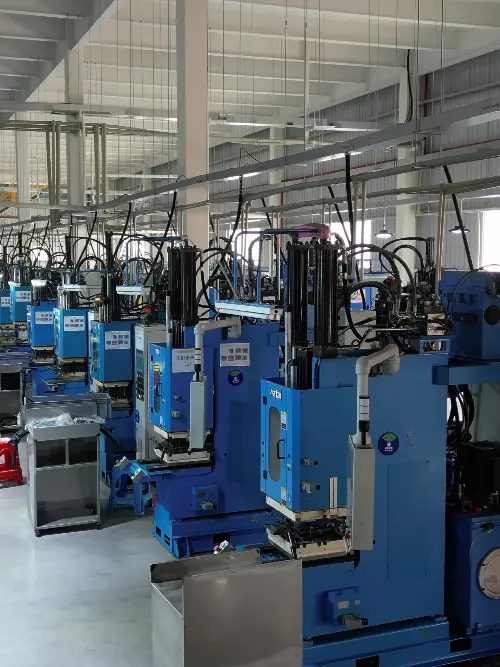
What sets UPT apart in the production of IATF 16949 certified automotive door seals is our fully vertically integrated production system. We control the entire process—from polymer material formulation R&D in our UPT Innovation Lab (equipped with 32+ testing systems) to mold development and final delivery.
To guarantee precision, our QC engineers perform cross-section checks under 10x magnification every 20 minutes during production. This ensures every component matches the original design drawings and meets the customer’s assembly needs.
Whether you are looking for body and door seals, sunroof gaskets, or engine compartment strips, UPT provides a One-Stop Rubber Solution. Our flow covers everything: Consult → Design → Validate → Produce → Deliver → Support. We support OEM batch supply and high-precision customization for complex geometries.
Q: What special requirements do New Energy Vehicle (NEV) rubber sealing strips have?
A: Compared to traditional vehicles, NEV seals often require better flame retardancy, electromagnetic shielding, and lightweight materials to compensate for battery weight while maintaining high-performance sealing.
Q: How do you test the sealing performance (IP grade) of your automotive seals?
A: We conduct rigorous testing based on ISO and ASTM standards in our 500 m² laboratory. This includes verifying the IP67 grade to ensure the seals remain leak-proof under extreme pressure and environmental stress.
Q: Why is continuous extrusion vulcanization important for door seal production?
A: Continuous extrusion ensures that the sealing strips have a uniform structure, consistent physical properties, and better dimensional stability, which is vital for the long-term durability of IATF 16949 certified automotive door seals.
Ready to upgrade your automotive sealing system? Our experts are available 24/7 to provide technical support and purchase proposals.
Are You Ready To Custom Rubber Parts With Us?
We will contact you within one working day. Please pay attention to your email.
WhatsApp: +8613776977440
Email: info@unicorpt.com
Adress: Pudong New Area, Shanghai, China


COPYRIGHT© 2026 Unicor Polymer Technologies Co., Ltd. | Privacy Policy
